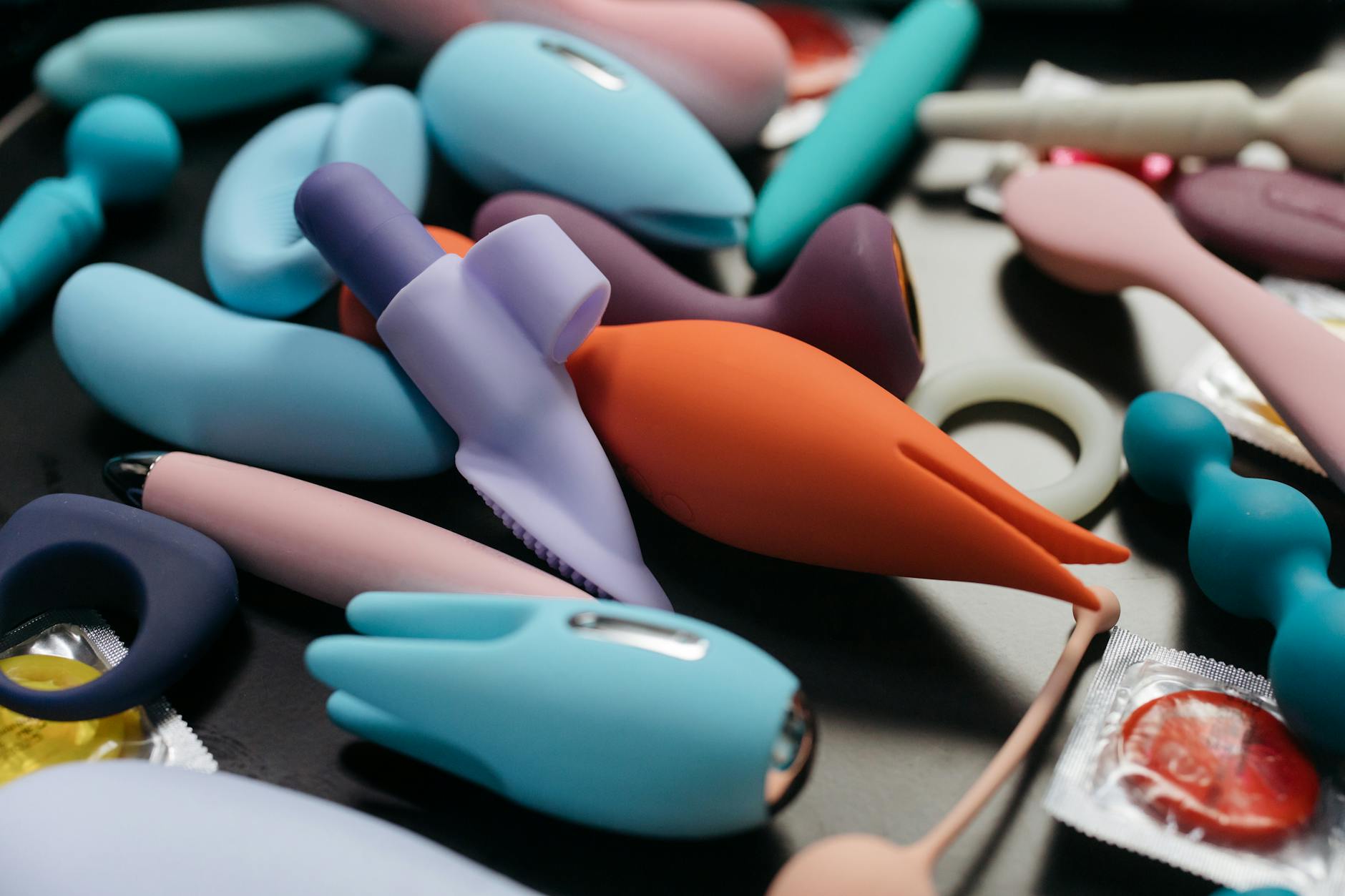
When your body doesn't feel like yours anymore
You started a new medication and suddenly your pleasure map got redrawn. Some days sensation feels sharp and present. Other days it's like your body's volume got turned down. Or maybe it's not about intensity at all. Maybe it's timing. Your brain needs fifteen extra minutes to wake up. Or it doesn't wake up at all that day.
This is real, and it happens more often than anyone talks about.
Why medications flatten, delay, or scatter sensation
Most medications that affect pleasure do it through one of three pathways. Understanding which one you're dealing with changes how you adapt.
First: blood flow and vascular response. Beta-blockers, some blood pressure medications, and SSRIs can reduce how quickly blood rushes to your genitals when you're aroused. No blood flow, no swelling, no engorgement. Everything feels less intense because, physiologically, less is happening. This usually stabilizes after 4-8 weeks, but it can last longer.
Second: dopamine and norepinephrine suppression. SSRIs and SNRIs work by preventing reuptake of serotonin (good for mood) but often suppress the neurotransmitters that drive desire and orgasmic response. This is dose-dependent. Lower doses sometimes cause less sexual blunting than higher ones. Switching to a medication with a lower sexual side effect profile (like bupropion or buspirone) is worth asking your doctor about, but that's a separate conversation from what you do right now.
Third: neural sensitivity shifts. Some medications, particularly anticonvulsants and certain anxiety meds, dull the peripheral nervous system overall. Your clitoris has fewer firing nerves. The signal takes longer to reach your brain. Orgasms, if they happen, feel muted or delayed.
The key thing: almost none of this is permanent. Your body adapts, or your prescriber pivots to a different med. But in the meantime, you still deserve pleasure. That's where tools like lemon vibrators come in.
How lemon vibrators work differently when medication has flattened sensation
Here's the thing about lemon vibrators specifically. The Lemon Clit Massager uses suction and gentle pulsing, which creates a different kind of stimulation than traditional vibration. When your nerves are blunted by medication, this matters.
Traditional vibrators rely on rapid frequency to trigger sensation. If your peripheral nerves are less responsive, they just feel buzzy and exhausting, not pleasurable. Suction-based stimulation like the Lemon works by creating a gentle vacuum around your clitoris. This doesn't depend on high-frequency buzzing. It works through a completely different mechanism. The suction pulls blood into the tissue, creates rhythmic pressure changes, and stimulates both surface and deeper nerve endings.
When sensation is scattered or inconsistent, this multi-layered approach often feels more grounded than traditional vibration alone.
Rebuilding a routine when pleasure feels unpredictable
The first week or two on new medication, don't expect your usual experience. That sounds obvious, but most people try to force their old routine and end up frustrated. Instead, treat this like you're starting over, but with knowledge.
Start with your Lemon on the lowest setting. Most lemon vibrators have three to five intensity levels. Spend a full week on level one or two. Let your body get reacquainted with the feeling without the pressure of "this should work like it used to." You're gathering data right now, not chasing orgasm.
Budget double the time you normally would. If you used to need five minutes of warm-up, give yourself twelve to fifteen. Medication doesn't just change intensity. It often changes timing. Your arousal arc gets stretched out. That's not weakness. It's just your new baseline, at least for now.
Keep a three-day log. Not obsessively. Just note: Did sensation show up? How long did it take? What level felt best? What time of day? This sounds clinical, but it actually takes pressure off. Instead of "why isn't this working," you're collecting information. Your brain shifts from frustrated to curious.
When some days work and others don't
Inconsistency is the hardest part psychologically because you can't predict it. You feel good one day, flat the next, and the next day something in between. This isn't random.
Medications peak in your bloodstream at different times depending on when you take them. Most SSRIs reach peak concentration four to eight hours after you take them. If you take yours in the morning, your most blunted window is mid-afternoon. If you take it at night, mornings might feel closer to normal.
Food matters too. Some medications absorb differently with food. Some need fat to absorb properly. If you had your lemon vibrator experience an hour after eating and it was mediocre, try waiting three hours after your next meal and see if sensation feels different.
Stress and sleep also modulate the effect. Medication side effects feel worse when you're tired or anxious. If you've had a brutal day, your nervous system is already dampened. The medication's blunting effect stacks on top of that.
None of this means you're broken. It means your pleasure is context-dependent right now. Work with that instead of against it.
The "give it twelve weeks" thing (and when to push back)
You'll hear that it takes twelve weeks for sexual side effects to stabilize. That's true for some people. For others, it takes four weeks. For some, it doesn't stabilize at all on that medication. The twelve-week window is real, but it's not a promise.
What I tell people: if after eight weeks on a stable dose your sensation hasn't improved, and you're feeling hopeless about it, that's worth bringing back to your prescriber. Don't just suffer through. Ask if dose adjustment helps, if splitting the dose into morning and evening changes things, or if switching to a different medication class makes sense. Bupropion and mirtazapine have fewer sexual side effects than many SSRIs. Buspirone can augment SSRIs without adding sexual blunting.
Your pleasure matters. It matters clinically because sexual function is a real marker of wellbeing. And it matters in your life, full stop.
Using lemon vibrators strategically when medication times sensation
If you've figured out that your medication peaks at certain times, time your pleasure around that if you can. Took your med at seven a.m.? Most alert sensation usually happens between three and five p.m. Plan accordingly.
If you're on an evening dose, mornings might feel better. That's not romantic or spontaneous, but it's effective. You deserve pleasure that actually works right now, not theoretical pleasure that might show up someday.
When you use your Lemon, start on a lower setting than you might think you need. Medication flattens sensation, so you might assume you need higher intensity. But higher intensity on already-dulled nerves often just creates uncomfortable buzzing. Start low, let your body find the frequency, and work up gradually over several sessions.
One more thing: the suction-based approach of lemon clitoral vibrators can actually help with consistency. Because they work through a different mechanism than pure vibration, many people find that they work better when sensation is scattered. The suction creates a physical pressure that your body registers even when chemical sensation is muted.
When to involve your partner (or not)
If you're in a relationship, this is worth talking about straight. Not in a heavy way. Just factually: new medication affects sensation for the first several weeks. You want to keep exploring pleasure, but the timeline and intensity might look different right now. That's it.
A good partner will understand that this is temporary and medication-related, not a reflection of attraction or their ability to turn you on. If they don't get that, that's a separate relationship conversation, but most people do.
If you're solo, this is purely about you learning your new body. No performance pressure. No one else's expectations. Just curiosity.
When sensation returns (and how to know when it's not coming back)
Most people find that sexual side effects either improve significantly by week eight or twelve, or they plateau. After twelve weeks, if nothing has shifted, it usually won't shift on that dose. That's when you talk to your prescriber about options.
When sensation does return, don't jump back to your old routine immediately. Your body adapted to the medication. Going from level two to level five suddenly might feel jarring or even painful. Ease back up over a few weeks. Let your body remember what higher intensity feels like.
Keep using your Lemon during the comeback phase. It's gentler than many vibrators and works well for rekindration. You can gradually increase intensity and frequency as sensation settles back in.
People also ask
How long does it usually take for medication to stop affecting sensation?
Most people see improvement between weeks six and twelve, though some notice changes much sooner (two to four weeks) and others take sixteen to twenty weeks. It's genuinely individual and depends on the specific medication, your dose, your body composition, and your baseline neurology. If nothing has shifted by week fourteen, talk to your prescriber about alternatives.
Can you use a lemon vibrator while taking SSRIs?
Absolutely. In fact, many people find that lemon clitoral vibrators work better than traditional vibrators when on SSRIs because they use suction instead of high-frequency vibration. The mechanism is different, so they often bypass some of the blunting. Start on a low setting and give your body time to respond.
Does changing when you take your medication help sexual sensation?
Yes, sometimes. If you take a once-daily SSRI in the morning and experience the worst sexual blunting mid-afternoon, asking your doctor about taking it at night might help. Evening dosing can shift your peak sensitivity to morning hours. This doesn't work for everyone, but it's worth discussing with your prescriber.
What if your sensation never fully returns?
If sexual side effects persist beyond twelve to sixteen weeks despite dose adjustments or timing changes, ask your prescriber about augmentation strategies (adding another medication to counteract sexual effects) or switching classes entirely. Medications like bupropion, mirtazapine, or buspiron are known for fewer sexual side effects. Your pleasure doesn't have to be the price of mental health.
Is inconsistent sensation after new medication permanent?
No. In most cases, either your body adjusts to the medication and sensation normalizes, or your prescriber switches you to something else. Inconsistent sensation typically indicates your nervous system is still adapting. By week twelve, most people see stabilization, though that might mean stabilizing at a different baseline than before.
Should you stop taking medication to fix sexual side effects?
No. Never stop medication without talking to your prescriber, and don't view this as a choice between mental health and pleasure. There are genuinely good alternatives and strategies. Talk to your doctor about this as a real medical concern, because it is.
The bridge between now and normal
Starting new medication is hard enough without your pleasure suddenly feeling unreliable. The scattered sensation, the unpredictability, the frustration that something that used to work doesn't work the same way. That's real and it sucks.
But it's temporary. Your body is adapting. By week eight or twelve, most people either feel normal again or have found a medication that works without this side effect. In the meantime, tools like lemon vibrators and the information in this post are here to bridge that gap.
Your pleasure matters. Even when it's inconsistent, even when it takes longer to arrive, even when it looks different than it used to. You deserve to feel good in your body, full stop. And you can.
If you're struggling with this, reach out. There's help, there are solutions, and you don't have to white-knuckle through it alone. That's what we're here for. Get in touch and let's figure this out together.
Sources
- Gregorian, R. S., Golden, K. A., Bahce, A., Goodman, C., Kwong, W. J., & Khan, Z. M. (2002). Antidepressant-induced sexual dysfunction. Annals of Pharmacotherapy, 36(10), 1577-1589.
- Montejo, A. L., Llorca, G., Izquierdo, J. A., & Rico-Villademoros, F. (2001). Incidence of sexual dysfunction associated with antidepressant agents: A prospective multicenter study of 1,022 outpatients. The Journal of Clinical Psychiatry, 62(Suppl 3), 10-21.
- Bahrick, A. S. (2008). Addressing the sexual side effects of antidepressant medication. Current Psychiatry, 7(2), 50-58.